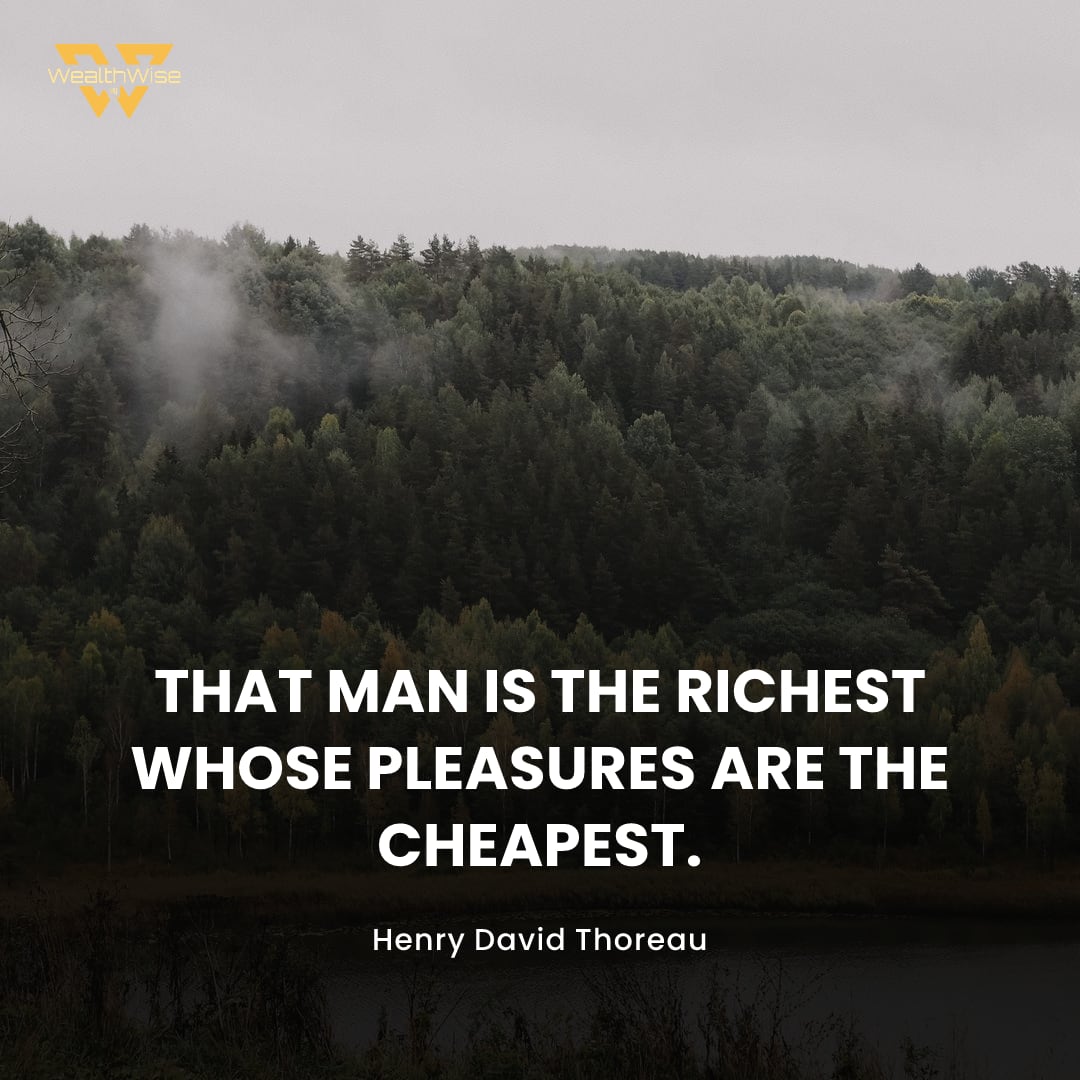
Personal Reflection:
When I hear this quote, the first thing I feel is relief. Because if the richest person is the one whose pleasures are cheapest, then wealth stops being a race I'm losing and starts being a choice I can make today.
We live in a world that keeps raising the price of joy. Somewhere along the way, rest started requiring a plane ticket. Connection started requiring a reservation. Celebration started requiring a receipt. And slowly, without deciding to, a lot of us ended up in a place where feeling good costs money—and so we have to keep earning more just to feel okay.
Thoreau is pointing at something simple and a little uncomfortable: the more expensive your happiness is, the more of your life you have to sell to buy it. If it takes $500 to feel good on a Saturday, you are not free. You're on a payment plan for your own contentment.
I think about the things that have genuinely filled me up over the years. A long walk with someone I love. A really good conversation that went two hours past when it should have ended. Sitting on the porch when the light gets soft. Music in the kitchen. A book I couldn't put down. Laughing so hard my stomach hurt. Almost none of them had a price tag. And yet if you asked me to name my richest moments, those are the ones I'd list.
So why don't we build our lives around them?
Part of it is that cheap pleasures don't advertise. Nobody is running commercials for "go outside." There's no marketing budget behind a phone call to your sister. The expensive stuff shows up in our feeds every single day, and the free stuff has to be remembered on purpose.
Here's the money piece, and I want to say it gently: this isn't about deprivation. I'm not suggesting anyone live a smaller life or feel guilty for enjoying nice things. What I'm saying is that when your pleasures are inexpensive, your money finally gets to do something other than plug the hole in your day. It can go toward stability. Toward options. Toward generosity. Toward the kind of future where you're not panicked in January.
There's also a freedom in it that I didn't expect. When you don't need much to be happy, you stop being so afraid. A slow month doesn't wreck you. A job you're unsure about doesn't own you, because you're not funding an expensive version of contentment. That's a kind of wealth no account balance can show you.
I've started asking myself a question when I spend: Am I buying the thing, or am I buying the feeling? Because usually I'm after the feeling—relief, comfort, reward, belonging—and there's almost always a cheaper doorway to that same room. Sometimes I still buy the thing. But asking the question changes how often.
The other thing I notice is that cheap pleasures require attention, and expensive ones don't. A good meal out will impress you whether you're paying attention or not. A sunset requires you to actually stop and look. Maybe that's the real lesson here—the rich life isn't the stocked one, it's the noticed one.
I don't think Thoreau was telling us to want nothing. I think he was telling us to want well. To be careful about what we let ourselves depend on for joy, because whatever it is, we'll spend our lives chasing it.
And if the things that bring you the most joy happen to be free, then you already woke up rich this morning.
3 Reflection Questions for You:
What are three things that reliably bring you joy that cost little or nothing—and when did you last make time for one of them?
Where in your life are you paying money for a feeling you could get another way?
If your happiness required half of what it costs now, what would you do with the freedom that created?