Personal Reflection:
When I hear this quote, I think about all the times I knew what to do and waited anyway. Waited for a friend to agree. Waited for someone with more letters after their name to confirm it. Waited for a sign. And while I waited, the moment quietly passed by.
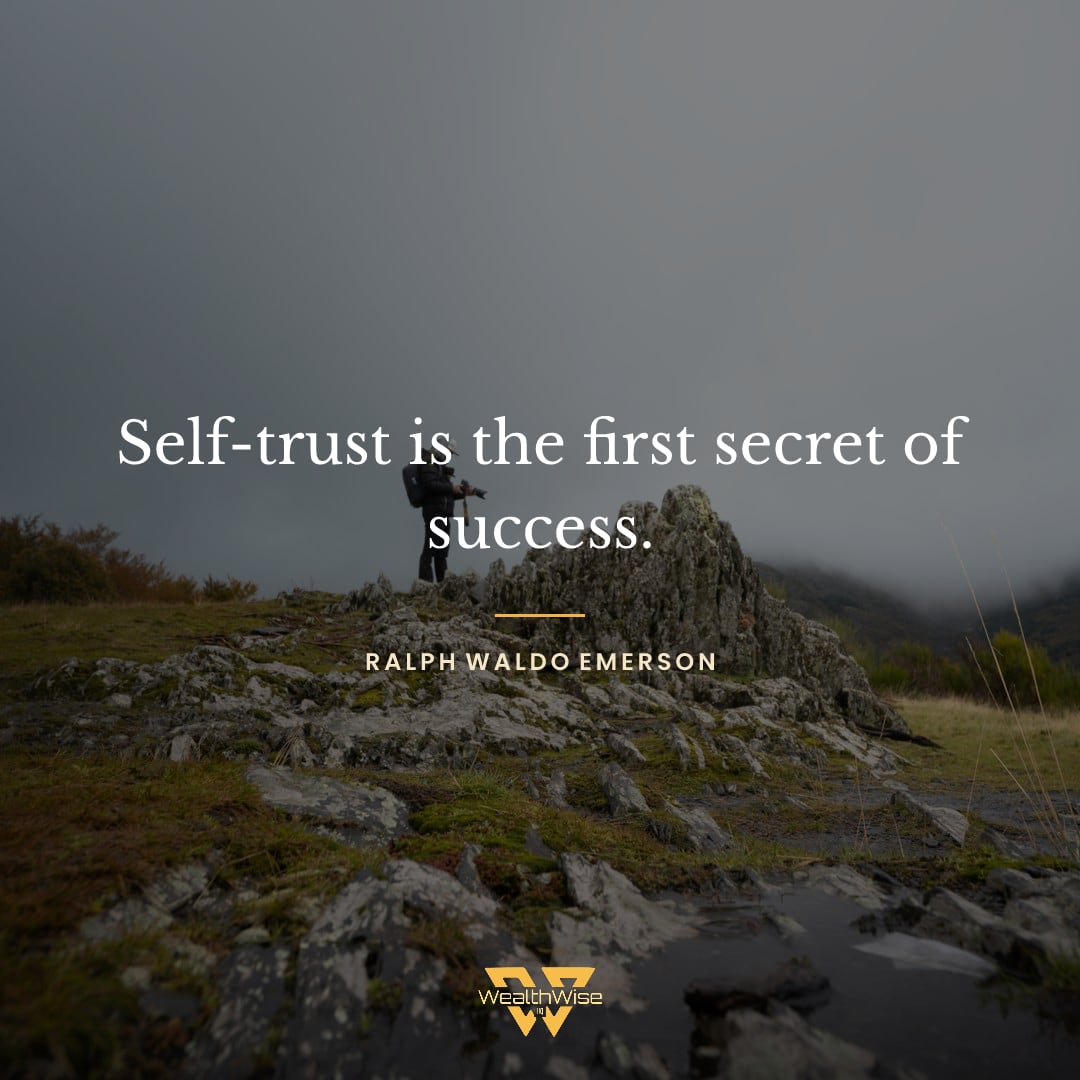
Emerson calls self-trust the first secret, and that word matters. Not the only one. Not the biggest one. The first. It's the thing that has to come before the plan, before the discipline, before the money, before the big leap. Because every good decision you'll ever make starts with a private moment where you decide whether your own judgment is worth following.
Here's what I've learned, though: self-trust isn't a feeling you're born with or a personality trait some lucky people got. It's a track record. It's built the same way credit is built — through small promises kept, over and over, until the pattern becomes proof.
Think about how this shows up with money. If you've told yourself twenty times that you'd start saving next month, and twenty times you didn't, part of you has quietly stopped believing you. So when a real opportunity shows up — a chance to start something, to change direction, to stretch — there's a voice inside that says, you know you won't follow through. That voice isn't cruelty. It's data. You taught it that.
The good news is that you can teach it something else. You do it by making promises small enough that you'll actually keep them. Not "I'll never overspend again," but "I'll look at my accounts every Sunday morning for ten minutes." Not "I'm going to transform my career," but "I'll send one email this week to someone doing work I admire." Keep it. Then keep it again. Each kept promise is a deposit into an account most of us never think about: the account of believing yourself.
I also think self-trust gets confused with arrogance, and they're really opposites. Arrogance says I can't be wrong. Self-trust says I might be wrong, and I'll still be okay, because I've handled being wrong before. That's the real foundation. It isn't the certainty that you'll succeed. It's the confidence that you can survive not succeeding and learn something on the way out.
And there's a cost to not having it. When you don't trust yourself, you outsource your decisions. You take advice from people who don't know your life. You follow whoever sounds most confident in the room. You buy the thing because someone told you it was the smart move. People without self-trust are the easiest people in the world to sell to, and I say that with compassion, because I've been that person.
The antidote isn't to stop listening to others — good counsel is a gift. It's to listen, then run it through your own values before you act. To ask: Does this fit the life I'm actually trying to build? You're allowed to be the final editor of your own decisions.
So if you're standing at some fork right now, wondering which way to go and waiting for permission, here's what I'd offer. You probably already know more than you think you do. Start with one small thing you can promise yourself today and actually deliver on. Then do it tomorrow. Self-trust is built in the smallest rooms, on ordinary days, when nobody's watching and nobody will ever know whether you kept your word.
Except you. And you're the one who needed to know.
3 Reflection Questions for You:
What's one promise you've broken to yourself repeatedly, and what smaller version of it could you actually keep this week?
Whose opinion do you reach for most often before making a decision, and what would change if you formed your own view first?
When was the last time you trusted your gut and it worked out? What did that experience teach you about your own judgment?